
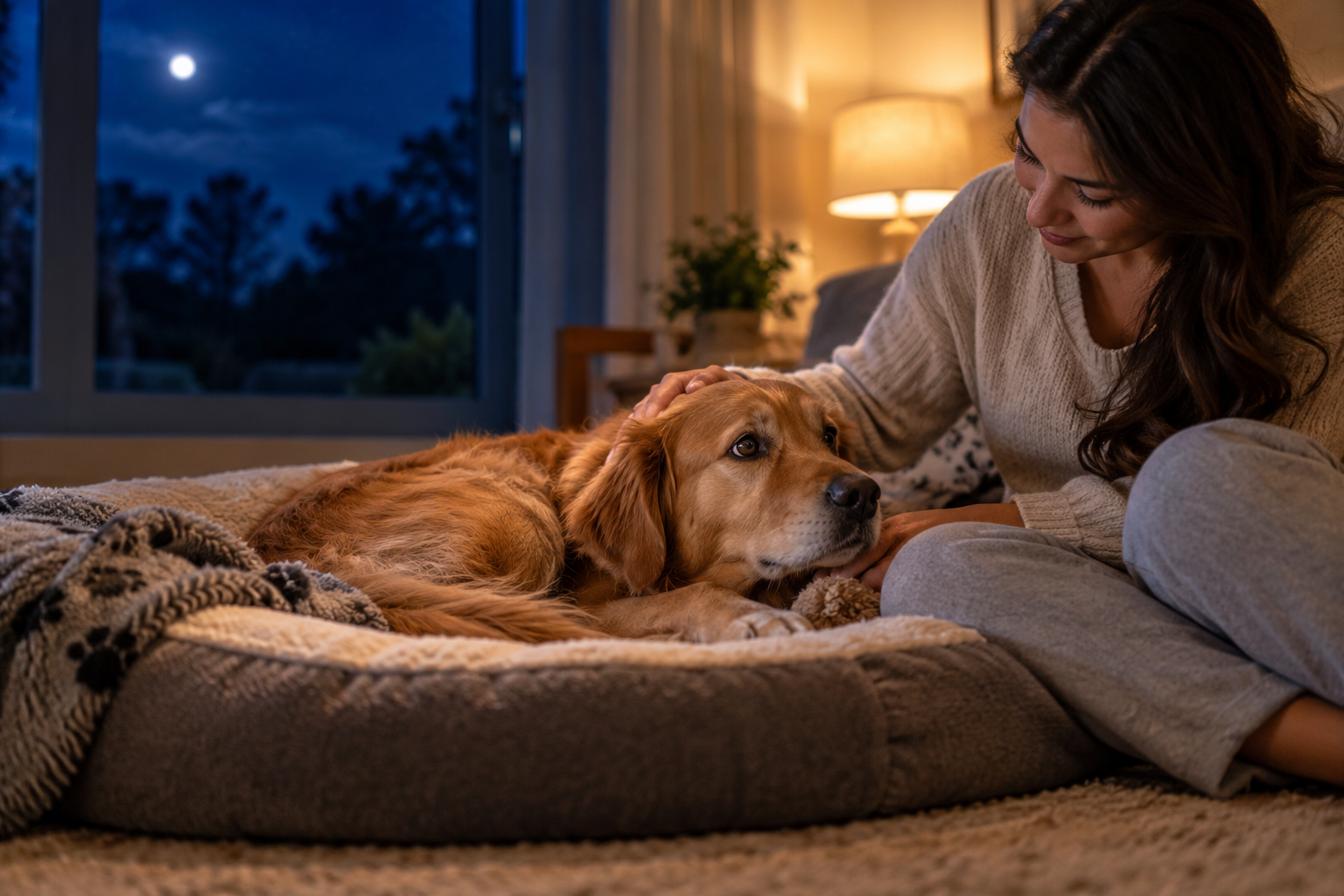
Have you ever settled into bed after a long day, only to notice your dog pacing around the room, whining, panting, or repeatedly getting up instead of sleeping? Seeing a beloved pet struggle to settle can be worrying, especially when you are unsure what is causing the behaviour.
Dog anxiety at night can develop for several reasons, including environmental changes, fear of unfamiliar sounds, separation-related distress, discomfort, or age-related changes. Some dogs need help adjusting to a consistent bedtime routine, while others may require veterinary attention to identify an underlying problem.
Understanding why your dog becomes unsettled after dark is the first step towards helping them feel safer and more comfortable.
In this guide, we explore the common causes of nighttime restlessness, signs to watch for, practical ways to create a calmer sleeping environment, and when professional advice may be necessary.
Why Is My Dog Anxious at Night?
Dogs can become unsettled at night for different reasons. Identifying the pattern of behaviour can help you understand what your pet may need.
1. Changes in Routine or Environment
Dogs often feel more secure when their daily routines are predictable. Moving house, introducing a new family member, changing sleeping arrangements, or spending less time together can affect how comfortably a dog settles at night.
Puppies adjusting to a new home may miss the familiar surroundings and companionship they previously knew. Rescue dogs may also need time to develop confidence in an unfamiliar environment.
How to help: Keep bedtime consistent, provide a comfortable sleeping space, and introduce changes gradually. Familiar bedding and a quiet resting area may help your dog feel more secure.
2. Separation-Related Distress
Some dogs become distressed when they cannot reach their favourite person. This may happen when family members go to bed, close a bedroom door, or leave the dog sleeping alone.
Possible signs include whining, barking, scratching at doors, following family members, or repeatedly trying to get closer to them.
However, these behaviours do not automatically mean your dog has separation anxiety. A veterinarian can help distinguish separation-related distress from other behavioural or medical causes.
3. Fear of Nighttime Sounds
Nighttime can make certain sounds more noticeable. Passing traffic, unfamiliar animals, wind, thunder, fireworks, and other sudden noises may startle dogs that are sensitive to sound.
A dog may react by barking at windows, hiding, trembling, panting, or seeking reassurance from its owner.
How to help: Close curtains if outside activity triggers your dog, move their bed away from noisy windows, and consider gentle background noise to reduce the contrast between sudden sounds and a quiet room.
4. Pain or Physical Discomfort
Not every restless dog is experiencing anxiety. Physical discomfort can make it difficult to settle into a comfortable sleeping position.
Joint stiffness, digestive discomfort, skin irritation, urinary problems, and other health concerns can affect sleep. Dogs may also pace or repeatedly change positions when something hurts.
If your dog suddenly becomes restless at night, appears uncomfortable, struggles to lie down, or shows other unusual symptoms, arrange a veterinary examination rather than assuming the problem is behavioural.
5. Age-Related Changes
Puppies and senior dogs may experience nighttime difficulties for different reasons.
Young puppies are still learning routines and may need toilet breaks during the night. Older dogs may develop joint discomfort, changes in hearing or vision, or age-related cognitive changes that affect their sleep patterns.
Senior dogs experiencing cognitive dysfunction may show disrupted sleep, nighttime pacing, confusion, or changes in their usual behaviour.
A veterinarian can assess these changes and recommend appropriate support.
What Are the Signs of Dog Anxiety at Night?
Recognising your dog’s behaviour can help you identify when something may be wrong.
Common signs include:
- Pacing repeatedly around the house or bedroom.
- Whining, barking, or howling without an obvious explanation.
- Panting or trembling when the room is not hot.
- Following family members closely or struggling to settle alone.
- Hiding, appearing unusually alert, or reacting strongly to sounds.
- Frequently getting up, changing positions, or scratching at doors.
- Waking repeatedly and showing difficulty returning to sleep.
These behaviours can indicate fear or distress, but they may also have medical explanations. Look for patterns, note when the behaviour starts, and consider whether anything in your dog’s environment has recently changed.
Keeping a brief record of nighttime episodes can help your veterinarian understand what is happening.
How to Calm a Dog at Night

Although there is no single solution for every dog, several practical changes may help make bedtime more comfortable.
1. Establish a Consistent Bedtime Routine
Try to keep your dog’s evening routine predictable. A calm walk or appropriate play session earlier in the evening, followed by a toilet break and quiet time, can help your pet transition towards rest.
Avoid suddenly introducing unfamiliar activities at bedtime. Give your dog time to settle into the routine and adjust it according to their age, health, and energy levels.
2. Create a Comfortable Sleeping Area
Choose a quiet, comfortable place where your dog can rest without frequent interruptions.
Consider your dog’s individual preferences. Some dogs settle best in their own bed near the family, while others prefer a quieter area away from household activity.
Provide suitable bedding, comfortable room conditions, and access to water. Older dogs may benefit from supportive bedding and an easily accessible sleeping area.
Never force a frightened dog into a crate or enclosed space if confinement increases their distress.
3. Reduce Nighttime Noise and Distractions
If your dog reacts to outside activity, try closing curtains, moving the bed away from windows, or using a fan or low-volume background sound.
Observe your dog’s response rather than assuming every sound will be helpful. The goal is to reduce stressful triggers while keeping the environment comfortable.
During thunderstorms or fireworks, prepare a secure indoor space before the noise begins. Keep doors and gates secure, as frightened dogs may try to escape.
4. Provide Appropriate Exercise and Mental Enrichment
Regular exercise and opportunities to explore, sniff, and play can support your dog’s overall wellbeing.
Choose activities that suit your pet’s age, breed, fitness, and health. A gentle sniffing walk, a short training session, or a suitable enrichment activity may be more helpful than overstimulating play immediately before bedtime.
Remember that excessive exercise is not a treatment for anxiety. If your dog remains distressed despite appropriate activity, investigate other possible causes.
5. Offer Calm Reassurance
A frightened dog needs patience, not punishment. Speak gently, remain calm, and allow your pet to approach you if they seek comfort.
Reward relaxed behaviour when your dog is comfortable enough to respond. Avoid shouting, scolding, or punishing whining and pacing, as these responses can increase fear.
If your dog experiences severe or persistent anxiety, ask your veterinarian about a tailored behaviour plan. Some dogs benefit from working with a qualified, reward-based trainer or veterinary behaviour professional.
6. Help Your Dog Adjust Gradually to Sleeping Alone
If your dog becomes unsettled when separated from you, start with manageable steps during the day.
Practise short periods in which your dog relaxes on a bed while you remain nearby, then gradually increase the distance if they stay comfortable. Progress at your dog’s pace and return to an easier step if distress develops.
Do not leave a severely distressed dog to cry for prolonged periods in the hope that they will simply get used to it. Separation-related problems may need structured training and veterinary guidance.
Why Is My Dog Suddenly Restless at Night?
A sudden change in nighttime behaviour deserves particular attention.
A dog that previously slept comfortably but now wanders, pants, cries, or repeatedly wakes may be responding to a new environmental trigger. However, pain, illness, urinary problems, medication effects, and age-related changes should also be considered.
Look for other clues, such as changes in appetite, drinking, toileting, walking, hearing, or responsiveness.
Contact your veterinarian if the behaviour is new, persistent, worsening, or accompanied by other symptoms. Seek urgent veterinary care for severe breathing difficulty, collapse, or signs of intense pain or distress.
Finding the underlying cause is more useful than trying to suppress the behaviour without understanding it.
Can Calming Supplements Help Dogs Settle at Night?

Some pet owners explore calming supplements as part of a broader approach to supporting their dog’s emotional wellbeing.
The suitability of a supplement depends on the dog’s health, the cause and severity of the behaviour, the ingredients, and any medications the dog is taking. Supplements do not replace veterinary assessment, appropriate training, or treatment for an underlying medical problem.
Exploring Calm & Comfort™
Secure a Pet RX™ AU offers Calm & Comfort™, a chicken-flavoured soft chew formulated to support calmness, relaxation, focus, and emotional balance in dogs.
The listed active ingredients include taurine, inositol, theanine, thiamine hydrochloride, and lemon balm leaf extract. The product is marketed as a non-sedating calming support option for situations such as travel, thunderstorms, fireworks, grooming, veterinary visits, and separation.
If your dog becomes unsettled at night, discuss the behaviour and any potential supplement with your veterinarian before introducing it. The product is not a proven treatment for every cause of nighttime anxiety, and its suitability will vary between dogs.
Follow the current product directions and precautions, and do not assume that a calming supplement will resolve pain, illness, or severe anxiety.
How to Build a Better Nighttime Routine for Your Dog
Small, consistent changes can help you understand what works for your pet.
Consider following this simple evening routine:
- Offer suitable exercise and enrichment earlier in the day.
- Keep feeding and bedtime schedules as consistent as practical.
- Provide a toilet break before settling down for the night.
- Prepare a quiet, comfortable sleeping area.
- Reduce avoidable noise and other environmental triggers.
- Observe your dog’s behaviour and record any recurring symptoms.
This routine is a starting point rather than a guaranteed solution. If your dog continues waking frequently or appears distressed, seek professional advice instead of repeatedly changing the routine without investigating the cause.
Frequently Asked Questions
Why is my dog anxious at night all of a sudden?
Sudden nighttime restlessness can be linked to environmental changes, frightening noises, separation-related distress, pain, urinary problems, or other medical conditions. If the change is unusual or persists, arrange a veterinary assessment.
How can I calm my dog at night naturally?
Start with a consistent routine, a comfortable sleeping area, appropriate daytime enrichment, and reduced exposure to stressful sounds. Gentle reassurance may help some dogs. If the problem continues, ask your veterinarian about further behavioural or medical support.
Should I let my anxious dog sleep in my bedroom?
That depends on your dog’s needs and the cause of the distress. Some dogs settle more comfortably when sleeping near their family. Others need a gradual training plan to become comfortable in their own sleeping space. Choose an arrangement that is safe and sustainable, and seek advice if separation triggers significant distress.
Can an older dog’s nighttime restlessness indicate a health problem?
Yes. Pain, reduced sensory function, urinary issues, and age-related cognitive changes can affect sleep and behaviour in senior dogs. New nighttime pacing or confusion should be discussed with a veterinarian.
Do calming supplements help with dog anxiety at night?
Some supplements may be appropriate for certain dogs as part of a wider management plan, but results vary, and they do not address every underlying cause. Ask your veterinarian before introducing a supplement, especially if your dog has an existing condition or takes medication.
When should I worry about my dog pacing at night?
Seek veterinary advice when pacing is new, persistent, worsening, or accompanied by changes in appetite, movement, toileting, or behaviour. Severe pain, breathing difficulty, collapse, or other signs of an emergency require urgent care.
Help Your Dog Feel More Comfortable at Night
Watching your dog struggle to settle can be exhausting for both of you. The most helpful first step is to understand what may be causing the behaviour rather than assuming every restless night is a sign of anxiety.
A predictable routine, comfortable surroundings, appropriate enrichment, and patient support may help some dogs relax. Persistent or sudden changes, however, deserve veterinary attention so that pain, illness, and other underlying problems are not overlooked.
If you are exploring additional calming support, learn more about Calm & Comfort™ from Secure a Pet RX™ AU and discuss whether it is suitable for your dog with your veterinarian.
Your dog deserves to feel safe, comfortable, and cared for, day and night.