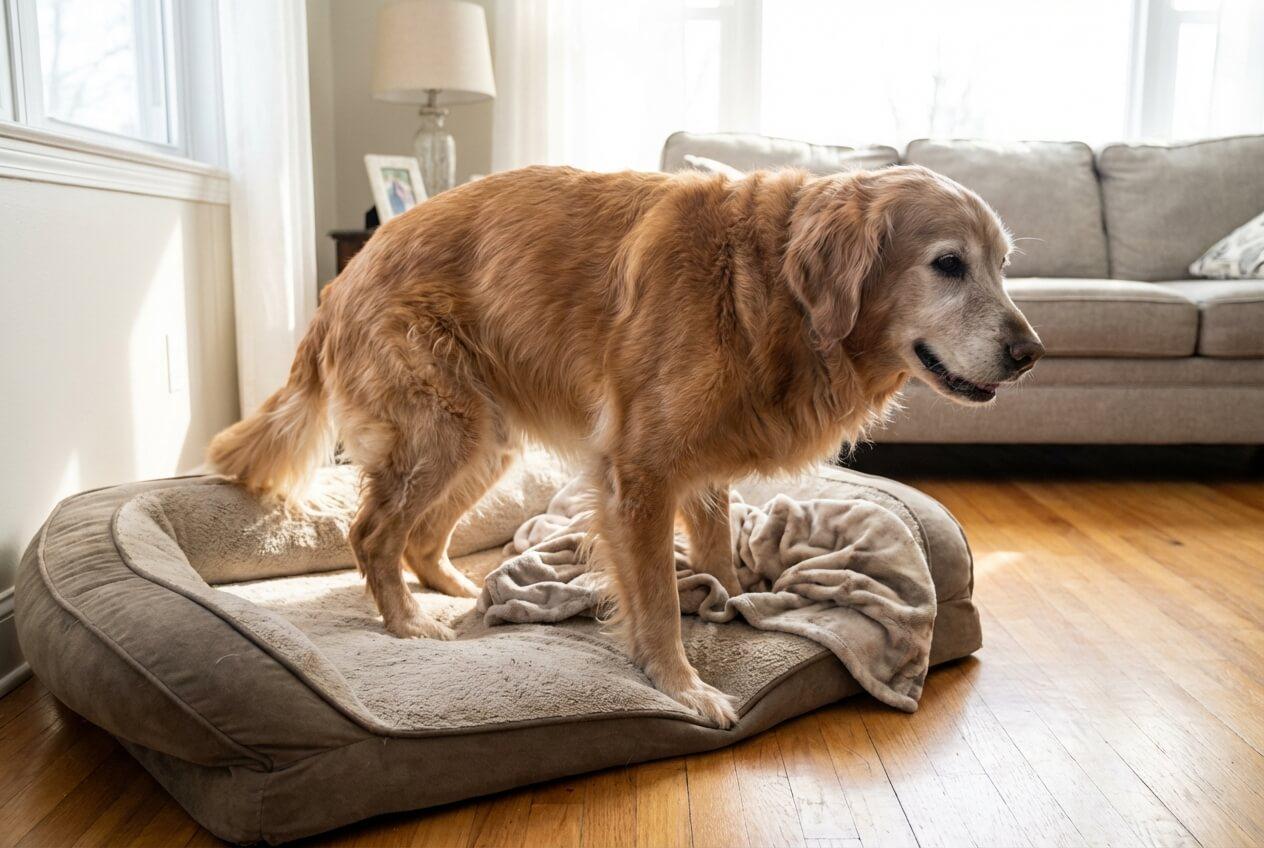
Have you ever noticed your dog getting out of bed and taking a few slow, stiff steps before moving normally again? Perhaps your dog struggles to stand after a long nap, hesitates before climbing the stairs, or seems less enthusiastic about the morning walk.
If you are wondering, “Why is my dog stiff after sleeping?”, there are several possible explanations. Temporary stiffness may occur after a period of rest, but recurring stiffness can also be associated with joint conditions, muscle soreness, injuries, or other health problems.
Understanding the signs can help you decide when your dog needs veterinary attention and what you can do to support comfortable movement.
In this guide, we explain common causes of stiffness after sleeping, warning signs to watch for, practical care tips, and how joint support supplements fit into a dog’s overall wellness routine.
Why Is My Dog Stiff After Sleeping?
Dogs can appear stiff after sleeping because they have been resting in one position for an extended period. However, stiffness that happens frequently, lasts longer than usual, or affects everyday activities deserves attention.
Several factors may contribute, including:
-
Age-related changes affecting the joints.
-
Osteoarthritis or other joint conditions.
-
Muscle soreness following exercise.
-
Previous injuries or soft tissue problems.
-
Excess body weight placing additional strain on joints.
-
Other medical or neurological conditions.
The pattern of the stiffness can provide useful information, but it cannot confirm the cause by itself.
For example, a dog that takes a few steps to loosen up may have a different problem from a dog that cries when standing, persistently limps, or refuses to put weight on a leg. A veterinarian can assess these differences and recommend appropriate care.
6 Common Causes of Stiffness After Sleeping
1. Age-Related Joint Changes
As dogs get older, changes in their joints, muscles and overall physical condition can affect how comfortably they move.
You might notice that your dog takes longer to stand up after resting, walks more slowly in the morning or becomes less interested in activities that were previously easy.
Age alone does not explain every mobility problem. Persistent stiffness should be assessed rather than dismissed as an unavoidable part of getting older.
2. Osteoarthritis
Osteoarthritis is a chronic joint condition that can affect dogs of different ages, although it is more common in older animals.
Possible signs include stiffness after rest, limping, reluctance to jump, reduced activity and difficulty with stairs. Some dogs also become uncomfortable when particular joints are moved.
A veterinarian can assess your dog and determine whether osteoarthritis or another condition is responsible. Treatment may involve weight management, appropriate exercise, pain management, rehabilitation and other measures tailored to the individual dog.
3. Muscle Soreness After Exercise
A long walk, energetic play session or unfamiliar activity can leave a dog feeling sore afterwards.
You may notice slower movement or reluctance to resume activity following exercise. However, significant pain, swelling, persistent limping or difficulty bearing weight should not automatically be attributed to ordinary muscle soreness.
Allow your dog to rest and contact your veterinarian if the symptoms are severe, persistent or worsening.
4. Previous Injuries
Injuries involving muscles, ligaments, tendons or joints can affect movement after periods of rest.
A dog may hesitate before standing, favour one leg or avoid jumping. Some injuries are not immediately obvious, especially if the symptoms appear gradually.
Avoid forcing your dog to exercise through discomfort. Veterinary assessment can help identify the problem and determine whether rest, treatment or rehabilitation is needed.
5. Excess Body Weight
Extra body weight can place additional mechanical stress on a dog’s joints and make movement more demanding.
If your dog is carrying excess weight, your veterinarian can recommend an appropriate feeding and activity plan. Gradual, supervised weight management may form an important part of supporting long-term mobility.
Avoid sudden increases in exercise or restrictive diets without professional guidance.
6. Other Health Conditions
Not every stiff dog has a joint problem. Some mobility changes may be associated with neurological disorders, spinal conditions or other illnesses.
Weakness, poor coordination, dragging the paws, or sudden difficulty walking needs particular attention. These signs should not be treated as ordinary stiffness after sleep.
How Can You Tell If Your Dog Has a Joint Problem?
Dogs cannot explain where they feel discomfort, so changes in movement and behaviour are important to notice.
| Sign you notice | What it may indicate |
|---|---|
| Slow to stand after sleeping | Joint discomfort, stiffness or muscle soreness |
| Reluctance to jump | Pain, weakness or reduced mobility |
| Difficulty climbing stairs | Discomfort, weakness or balance problems |
| Limping or favouring one leg | Injury, joint disease or another painful condition |
| Shorter or slower walks | Pain, fatigue or a general health problem |
| Less interest in playing | Discomfort or a change in overall wellbeing |
| Yelping or reacting to touch | Possible pain requiring assessment |
These signs are not a diagnosis. If your dog develops persistent stiffness, book a veterinary appointment. Seek urgent veterinary care if your dog suddenly cannot stand or walk, cannot bear weight, appears severely painful, or develops sudden weakness.
What Can You Do to Help a Stiff Dog at Home?

Once urgent problems have been ruled out and you have veterinary guidance, several everyday changes may help make movement more comfortable.
Provide a Comfortable Resting Area
Choose a supportive bed in a warm, draft-free area. Make sure your dog can get in and out easily without needing to jump from a high surface.
Non-slip rugs or mats can also help dogs feel more secure when standing on smooth flooring.
Keep Exercise Appropriate and Consistent
Regular, controlled activity can help maintain fitness and muscle strength. The right amount depends on your dog’s age, health, and mobility.
Shorter, more frequent walks may suit some dogs better than occasional strenuous outings. If your dog has a diagnosed joint condition, ask your veterinarian which activities are appropriate.
Do not force movement when your dog is painful or struggling.
Maintain a Healthy Weight
A healthy body condition can reduce unnecessary strain on the joints. Your veterinarian can help you assess your dog’s weight and establish a suitable feeding plan.
Use measured portions and account for treats when reviewing daily food intake.
Make Everyday Movement Easier
Consider ramps where appropriate, secure flooring and easy access to food, water and resting areas. These adjustments can reduce the need for sudden jumping or climbing.
Monitor Changes in Movement
Keep track of when stiffness occurs, how long it lasts, and whether it is becoming more frequent. Short videos of your dog walking or standing may also help your veterinarian understand what you have noticed.
Do not give human painkillers or other medicines unless your veterinarian specifically directs you to do so. Some medicines intended for people can be dangerous to dogs.
Can Joint Supplements Help Dogs With Stiffness After Sleeping?
Joint supplements are often considered by pet owners who want to support their dogs’ mobility. However, a supplement is not a diagnosis or a guaranteed treatment for stiffness.
Some formulas contain ingredients associated with cartilage, connective tissue or joint health. The evidence for individual ingredients varies, and a product that helps one dog may not provide a noticeable benefit for another.
Common ingredients in dog joint supplements
| Ingredient | Why it is included in some formulas |
|---|---|
| Glucosamine | Associated with cartilage structure |
| Chondroitin sulfate | A component of cartilage |
| MSM | Commonly included in joint support formulas |
| Boswellia | A botanical ingredient used in some joint products |
| Turmeric | Included in some wellness formulas |
| Collagen | Used to support connective tissue-related wellness |
| Eggshell membrane | Contains components associated with connective tissue |
Ingredient lists alone cannot establish how effective a particular product will be. The amount, formulation, product quality, and evidence all matter.
If your dog has persistent stiffness or a diagnosed joint condition, discuss supplement options with your veterinarian, particularly if your dog takes medication or has another medical problem.
Mobility+™ From Secure a Pet RX™ AU
For pet owners exploring a dedicated joint support supplement, Mobility+™ from Secure a Pet RX™ AU is formulated with a combination of ingredients intended to support canine joint health and mobility.
According to the product information, each serving of two soft chews contains:
| Active ingredient | Amount per two soft chews |
|---|---|
| Glucosamine HCl | 250 mg |
| MSM | 250 mg |
| Boswellia serrata gum extract | 100 mg |
| Devil’s claw root extract | 100 mg |
| Turmeric root powder | 100 mg |
| Balanced Kollagen | 50 mg |
| Chondroitin sulfate | 50 mg |
| Type II chicken collagen | 50 mg |
| Eggshell membrane | 50 mg |
The formula brings together ingredients commonly used in joint support products. This does not mean it will resolve stiffness after sleeping or treat an underlying condition.
Before choosing a supplement, review the complete ingredient list and directions, and ask your veterinarian whether it is appropriate for your dog.
Frequently Asked Questions
Why is my dog stiff after sleeping but fine later?
Stiffness that improves after movement may be associated with joint or muscle problems, including osteoarthritis. The pattern alone cannot identify the cause. If it happens repeatedly, arrange a veterinary assessment.
Is it normal for older dogs to be stiff after sleeping?
Stiffness becomes more common with age, but it should not automatically be considered normal. Older dogs can develop treatable conditions that affect comfort and mobility, so recurring symptoms deserve attention.
Can a dog’s sleeping position cause stiffness?
Resting in one position may contribute to temporary stiffness, but repeated or prolonged symptoms can have other causes. If your dog appears painful, limps, or struggles to stand, contact your veterinarian.
Should I walk my dog if it is stiff after sleeping?
Do not force exercise through pain. If the stiffness is mild and your dog moves comfortably, gentle activity may be suitable, depending on their health. Ask your veterinarian for guidance if the stiffness is new, persistent, or recurring.
Do joint supplements work for dogs?
Evidence varies by ingredient and formulation, and benefits are not guaranteed. A veterinarian can help determine whether a particular supplement is appropriate alongside other measures to support mobility.
When should I worry about my dog’s stiffness?
Arrange veterinary care for persistent or worsening stiffness, recurring limping or difficulty standing. Sudden inability to walk, severe pain or sudden weakness warrants urgent veterinary attention.
Final Thoughts
If you have been asking, “Why is my dog stiff after sleeping?”, pay attention to how often it happens, how your dog moves and whether other symptoms are present.
Age-related changes, osteoarthritis, muscle soreness and injuries are among the possible causes, but only a veterinary assessment can help identify the problem.
Comfortable bedding, appropriate exercise, healthy weight management and professional guidance can all play a role in your dog’s mobility care. Joint supplements may be worth discussing with your veterinarian, but they should not replace diagnosis or necessary treatment.
If you are exploring joint support options, visit Mobility+™ from Secure a Pet RX™ AU to review the formula and product information.
Your dog’s comfort starts with noticing changes early and choosing care based on their individual needs.