

There is something heartbreaking about watching your dog scratch over and over again.
Maybe it starts with a few scratches after a walk. Then you notice your dog licking their paws more often. A little later, they are rubbing their face against the carpet, chewing at their legs, or waking up during the night because they cannot seem to get comfortable.
And naturally, you start wondering, why is my dog scratching so much?
Is it allergies? Fleas? Dry skin? Something they ate? Something outside? Or could there be another reason that you have not noticed yet?
The truth is that itching is not a problem with just one possible explanation. It can be a sign of several different skin or health concerns. Veterinary sources identify parasites, infections, and allergies among the most common causes of itching in dogs.
The good news is that paying attention to your dog’s habits can help you notice changes early.
In this guide, we will look at some of the common reasons dogs scratch, what you can look for at home, when it is time to speak with your veterinarian, and how everyday wellness support may fit into your dog’s overall care.
Why Is My Dog Scratching So Much?
A little scratching is completely normal. Dogs scratch just like people occasionally scratch their skin.
The concern starts when scratching becomes frequent, intense or difficult for your dog to stop.
A dog with persistent itching may scratch, lick, chew or rub their skin. Sometimes the itching is limited to one part of the body. Other times, your dog may seem uncomfortable almost everywhere.
Think about your own skin when you have an irritating itch. Even when you know you should leave it alone, it can be incredibly difficult not to scratch.
Your dog can experience something similar, except they cannot tell you exactly what is bothering them.
That is why repeated scratching deserves your attention.
Seasonal Allergies Can Make Dogs Itchy
Have you noticed that your dog seems itchier at certain times of the year?
Seasonal allergies may be one possible reason.
Dogs can react to environmental allergens such as pollen, mould and dust. Some dogs experience itching mainly during certain seasons, while others can have environmental allergies throughout the year.
For example, your dog may come back from playing outside and begin licking their paws. They may scratch around their ears or rub their face against the sofa.
You might also notice that the problem appears around the same time each year.
This does not automatically mean your dog has an allergy. There are several possible causes of itching, which is why persistent symptoms should be properly assessed.
Still, noticing a seasonal pattern is useful information to share with your veterinarian.
Fleas Can Cause More Than a Little Itch
Sometimes the answer is surprisingly simple.
Fleas can cause intense itching, and some dogs are particularly sensitive to flea saliva. Affected dogs may scratch, lick, chew, rub, or nibble their skin. Hair loss, scabs and secondary skin infections can also develop when the problem continues.
The frustrating part is that you may not always see obvious fleas.
So if your dog suddenly becomes extremely itchy, do not assume that allergies are the only possibility.
Regular parasite prevention and checking your dog as recommended by your veterinarian are important parts of responsible pet care.
Food Sensitivities May Be Part of the Picture

Food can also be part of the investigation when a dog has ongoing itching.
Some dogs can have food allergies or sensitivities that contribute to skin problems. However, it is important not to assume that every itchy dog has a food allergy.
Veterinary diagnosis may involve a carefully managed diet trial rather than simply switching from one commercial food to another. Merck Veterinary Manual notes that food allergy is assessed through a proper elimination diet and response to that diet.
This is one reason it can be helpful to keep track of what your dog eats, including treats and extras.
If you are considering a major diet change because your dog is constantly scratching, speak with your veterinarian first.
Your Dog’s Environment Could Be Irritating Their Skin
Sometimes the trigger may be around your dog rather than inside their food bowl.
New cleaning products, bedding, grooming products, or other environmental exposures can sometimes irritate sensitive skin.
Dogs spend a lot of time close to the ground. They walk through grass, lie on carpets, roll around outside, and explore with their noses.
That means their skin can come into contact with many different things throughout the day.
If your dog started scratching after a change in their routine, home environment or grooming products, make a note of it.
Small details can sometimes help your veterinarian understand the bigger picture.
Dry or Irritated Skin Can Be Uncomfortable
Not every itchy dog has an allergy.
Skin irritation and other dermatological problems can have many causes, including external irritants, infection, parasites, and allergic skin disease.
You may notice dry-looking skin, flakes, redness, changes in coat condition or increased licking.
It is also possible for scratching itself to make the skin worse.
Your dog scratches because something feels uncomfortable. Then repeated scratching, licking or chewing can damage the skin, creating even more irritation.
It can become a frustrating cycle.
Pay Attention to Paw Licking
Some pet parents focus on scratching and overlook another common sign of discomfort.
Paw licking.
If your dog suddenly starts licking their paws frequently, pay attention to when and where it happens.
Does it happen after outdoor walks?
Does your dog do it mostly at night?
Are the paws looking red or irritated?
Is your dog also scratching their ears, face or body?
Licking can be a sign of itching, and veterinary dermatology guidance specifically includes licking and rubbing among behaviours that can indicate pruritus.
One behaviour by itself may not tell you what is wrong, but several behaviours together can give you useful clues.
Look Beyond the Scratching
When you are trying to understand why is my dog scratching so much, look at the whole picture.
Ask yourself:
• When did the scratching begin?
• Is it getting worse?
• Does it happen at a particular time of year?
• Is your dog licking their paws?
• Are they rubbing their face?
• Are there bald patches?
• Do you see redness, scabs or flakes?
• Does the skin smell different?
• Has your dog started chewing certain areas?
• Have you changed their food or treats?
• Have you introduced a new grooming product?
• Has your dog spent more time outside recently?
• Are you keeping up with recommended parasite prevention?
These observations may seem small, but they can be very helpful when discussing the problem with your veterinarian. A veterinary skin history often considers the timing, progression, seasonality, location, and type of itching.
How Everyday Nutrition Can Support Your Dog
Once parasites, infections or other underlying problems have been considered, many pet parents also start thinking about everyday wellness.
After all, your dog’s skin does not exist separately from the rest of their body.
Nutrition plays an important role in overall wellbeing, and many pet parents look for ways to support their dog’s immune system, digestive health and skin health as part of a balanced routine.
This is where a thoughtfully formulated supplement may have a place.
It is important to be clear about what a supplement can and cannot do.
A nutritional supplement should not be viewed as a replacement for veterinary care, prescribed medication or treatment for an underlying condition.
Instead, it can be considered as part of a broader wellness routine.
Supporting Skin, Gut and Immune Wellness
There is growing interest in the relationship between gut health, immune function and overall wellbeing.
That is one reason some modern dog supplements combine ingredients intended to support digestive and immune wellness rather than focusing on just one area.
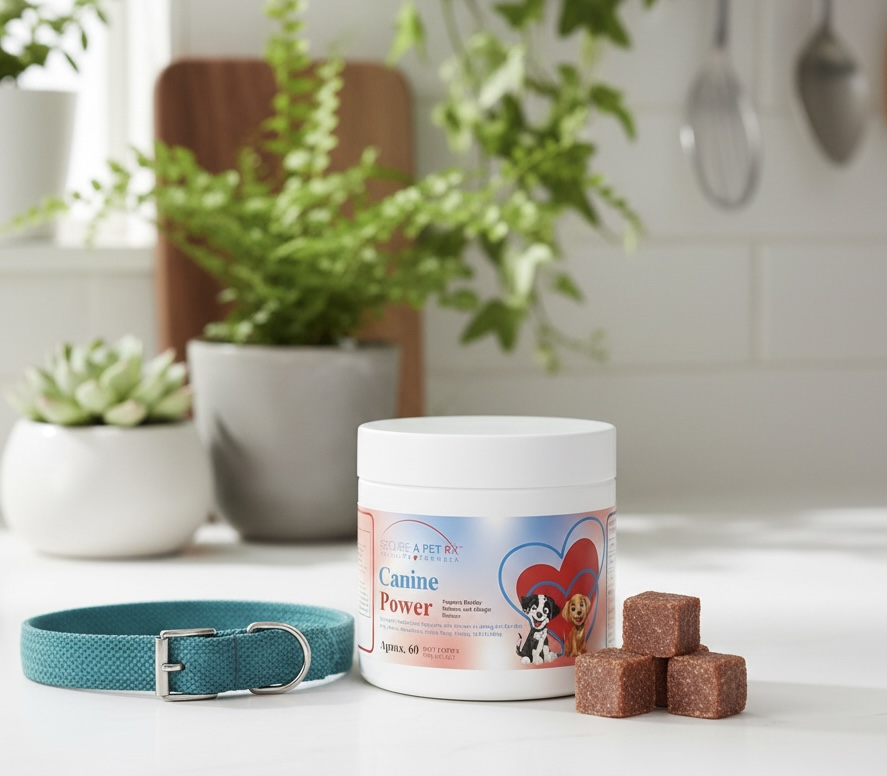
Canine Power™ from Secure a Pet RX™ is formulated as a soft chew for dogs with ingredients including quercetin, turmeric, ashwagandha, colostrum, prebiotics, postbiotics, probiotics and pancrelipase.
The formula is designed to support balanced immune function, gut health and skin comfort.
For pet parents looking for nutritional support for their dog’s everyday wellness, you can learn more about Canine Power™ allergy and immune support for dogs.
The soft chew format can also make supplementation easier for pet parents who struggle to get their dogs to accept powders or tablets.
Still, every dog is different.
If your dog has a medical condition, takes medication, is pregnant or is intended for breeding, speak with your veterinarian before introducing a new supplement.
Simple Things You Can Do at Home
While you are figuring out what may be behind your dog’s itching, there are a few simple habits that can help you keep track of their wellbeing.
Keep a scratching diary
Write down when your dog scratches and what was happening beforehand.
You may eventually notice a pattern.
Check their skin regularly
During grooming, look for unusual redness, hair loss, scabs, flakes, swelling or changes in skin colour.
Keep bedding clean
Wash your dog’s bedding regularly and follow appropriate cleaning practices for your home.
Pay attention after outdoor time
If your dog becomes noticeably itchier after spending time outside, make a note of it.
Stay consistent with parasite prevention
Ask your veterinarian which parasite prevention approach is appropriate for your dog and follow the recommended schedule.
Do not keep changing everything at once
If you suddenly change food, treats, shampoo, and supplements at the same time, it becomes difficult to know what affected your dog’s symptoms.
If your dog has ongoing itching, a structured approach with veterinary guidance is much more useful.
When Scratching Means It Is Time to Call the Vet
Sometimes a little scratching really is just a little scratching.
But there are situations where it should not be brushed aside.
Contact your veterinarian if your dog has persistent or worsening itching, especially if you notice:
• Significant hair loss
• Open or damaged skin
• Scabs or sores
• Strong skin odour
• Discharge
• Swelling
• Severe redness
• Constant paw licking or chewing
• Changes in appetite or behaviour
• Signs of pain or significant discomfort
• Scratching that is interfering with sleep or normal activity
Persistent itching can be associated with parasites, infections and allergic skin disease, and treating the underlying cause is important.
If you are unsure whether your dog’s scratching is normal, it is better to ask than to spend weeks wondering whether something is wrong.
Your Dog Cannot Tell You What Is Wrong
This is probably the hardest part of being a pet parent.
Your dog cannot explain whether their skin feels dry, whether a particular area hurts or whether something outside has triggered an uncomfortable reaction.
They simply scratch.
And you are left trying to understand what they need.
That is why paying attention matters.
You do not have to become an expert in canine skin conditions. You simply need to notice changes, keep track of patterns, and know when professional advice is needed.
If your dog is dealing with occasional discomfort, supporting good everyday nutrition, skin health and overall wellness can also be part of a thoughtful care routine.
Most importantly, do not ignore persistent itching.
Your dog’s repeated scratching may be their only way of saying something does not feel right.
Final Thoughts
When your dog keeps scratching, it is easy to worry that you are missing something.
You may find yourself checking their coat again and again, wondering whether the problem will get worse or whether your dog is uncomfortable when you are not looking.
Try not to panic.
Start by paying attention to the pattern. Look for changes. Check for possible triggers. Keep parasite prevention consistent. Support your dog’s everyday nutrition and wellbeing. And when the itching does not settle, or something looks unusual, speak with your veterinarian.
Your dog depends on you to notice the little things.
Sometimes, that simple act of paying attention is one of the most caring things you can do.
Frequently Asked Questions
Why is my dog scratching so much but I cannot see fleas?
Fleas are only one possible cause of itching. Dogs can also scratch because of allergies, infections, environmental triggers, and other skin problems. Not seeing fleas does not automatically rule out every possible cause, so persistent itching should be discussed with your veterinarian.
Why does my dog keep licking their paws?
Frequent paw licking can be associated with itching or skin discomfort. Environmental allergies, parasites, infections, and other causes can be involved. If paw licking becomes frequent or intense, it is worth having your dog assessed.
Can seasonal allergies make my dog scratch?
Yes. Some dogs experience itching associated with environmental allergens such as pollen, mould and dust. Dogs with seasonal patterns may become itchier during particular times of the year.
Can food cause itchy skin in dogs?
Food allergies can contribute to itching in some dogs, but they are not the only possible explanation. A veterinarian may recommend a carefully controlled elimination diet to investigate a suspected food allergy.
Can supplements help support my itchy dog?
Some nutritional supplements are formulated to support areas such as immune function, digestive health, and skin wellness. They should be considered part of an overall wellness routine rather than a replacement for veterinary diagnosis or treatment.
What is Canine Power™?
Canine Power™ from Secure a Pet RX™ is a soft chew formulated with ingredients including quercetin, turmeric, ashwagandha, colostrum, prebiotics, postbiotics, probiotics and pancrelipase. It is designed to support immune, digestive and skin wellness in dogs.
When should I take my dog to the veterinarian for scratching?
If scratching is persistent, severe or getting worse, or if you notice hair loss, wounds, scabs, strong odour, discharge, redness or significant discomfort, contact your veterinarian. The underlying cause needs to be identified before the most appropriate treatment can be chosen.
Should I stop my dog’s medication and use a supplement instead?
No. Do not stop prescribed medication or replace veterinary treatment with a supplement without speaking with your veterinarian. Supplements can be considered as nutritional support, but they are not a substitute for appropriate medical care.