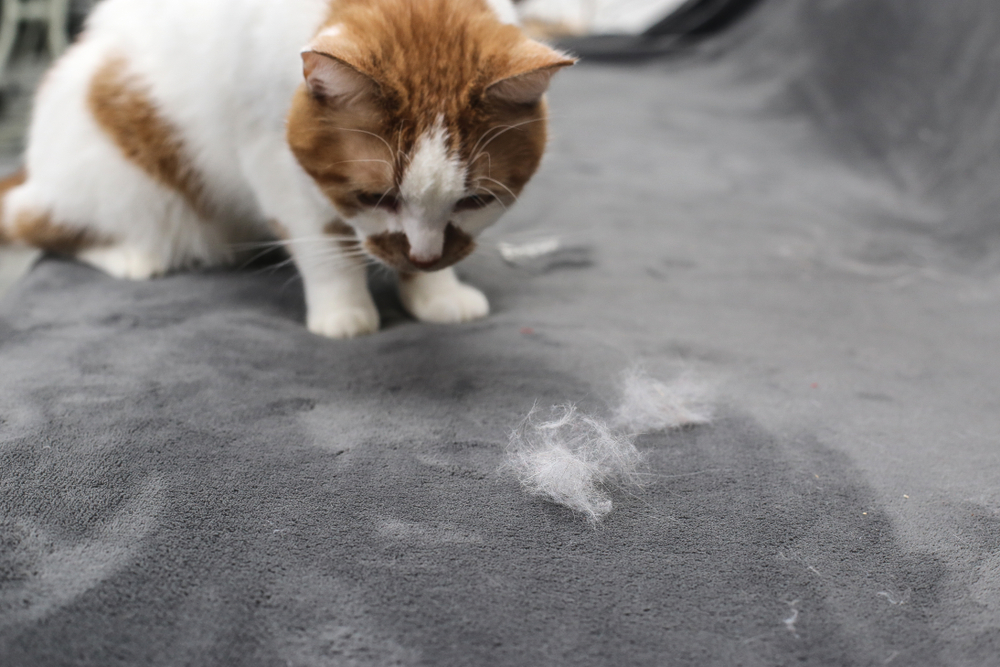
Finding extra fur around the house is something almost every cat owner knows well. A little fur on the sofa, your clothes, or the floor is usually nothing to worry about.
But what happens when you suddenly notice much more hair than usual?
Maybe your cat has started leaving fur everywhere. Perhaps their coat looks thinner, you have noticed a small bald patch, or your cat seems to be grooming themselves more than normal. Naturally, you may start wondering, why is my cat losing hair?
It can be worrying, especially when your cat cannot tell you what is bothering them.
The good news is that shedding is often a completely normal part of being a cat. However, excessive hair loss can sometimes point to an underlying problem that deserves attention.
Understanding the difference can help you know when to simply keep an eye on your cat and when it is time to speak with a veterinarian.
Is cat shedding normal
Yes, cats naturally shed old and damaged hair to make room for new growth.
The amount of shedding can vary depending on your cat, their coat type, their age, their lifestyle, and the time of year. Indoor cats may also shed throughout the year because they are exposed to consistent indoor temperatures and lighting.
You may notice more fur around your home during certain periods, and regular brushing can help remove loose hair before it ends up on your furniture.
Normal shedding usually does not create bald patches or areas where the skin becomes clearly visible.
If your cat is eating normally, behaving as usual, grooming normally, and has a healthy-looking coat without irritated skin, ordinary shedding may simply be part of their normal routine.
When shedding becomes something to watch
There is a difference between finding loose fur and noticing actual hair loss. If you suddenly notice thinning areas, bald patches, broken hairs, redness, scabs, excessive licking, or frequent scratching, it is worth paying closer attention. You may also notice that your cat is grooming one particular area repeatedly.
These changes do not automatically mean that something serious is happening. Cats can lose hair for many different reasons, and some causes are relatively simple to address.
Still, a noticeable change from your cat’s normal coat is worth taking seriously.
Normal shedding or possible hair loss
A quick comparison can help you understand what you are seeing at home.
| What you notice | Often normal | Worth checking |
|---|---|---|
| Loose fur | Regular shedding around the home | A sudden and unusual increase |
| Coat appearance | Fur remains generally full and even | Noticeable thinning or missing fur |
| Bald areas | Usually not expected | Clearly visible bald patches |
| Grooming | Normal daily grooming | Constant licking, biting, or grooming of one area |
| Skin | Comfortable and free from irritation | Redness, scabs, sores, or unusual irritation |
| Behaviour | Normal eating, playing, and resting | Low energy, appetite changes, or unusual behaviour |
The table is only a general guide. Your cat may have individual shedding patterns, so a noticeable change from their normal condition is what matters most.
Common reasons cats can lose hair
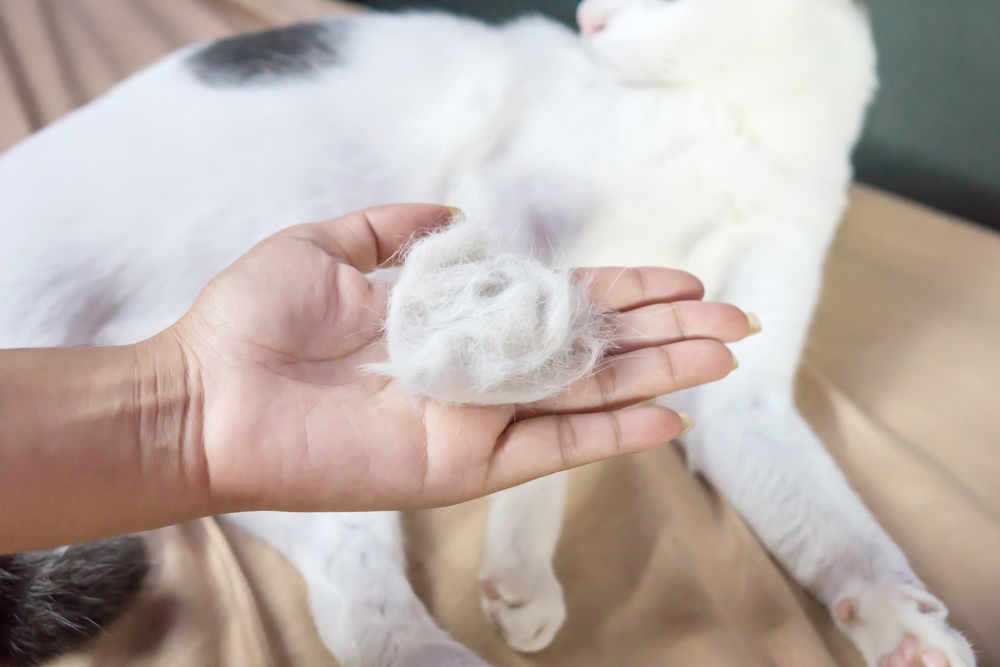
If you have been wondering why is my cat losing hair, there are several possible explanations.
Excessive grooming
Cats are naturally clean animals, and grooming is a normal part of their daily behaviour. However, some cats groom themselves so much that they begin removing their own hair. Stress, discomfort, skin irritation, allergies, parasites, and other problems can sometimes lead to excessive grooming.
If your cat is repeatedly licking or biting one particular area, look closely at the skin and consider speaking with your veterinarian.
Fleas and parasites
Fleas are a common cause of itching in cats. Even a small number of fleas can make some cats extremely uncomfortable. Your cat may scratch, lick, bite, or groom themselves more than usual. You may not always see fleas easily because cats are very good at grooming themselves.
If you suspect fleas or another parasite, appropriate veterinary advice and parasite control are important.
Allergies
Cats can experience allergies just like people can. Food, environmental allergens, flea bites, and other triggers can sometimes cause skin irritation. A cat with an allergy may scratch or groom excessively, which can eventually lead to areas of thinning fur or hair loss.
Because different skin conditions can look similar, it is best to let a veterinarian determine the likely cause.
Skin infections and irritation
Skin infections and other skin problems can affect the appearance of your cat’s coat. You might notice redness, scaling, scabs, unusual odour, or areas where the hair appears thinner. If your cat’s skin looks irritated or the hair loss continues, professional advice is important.
Stress and anxiety
Stress can affect cats in ways that are easy to miss. Changes in the household, moving home, a new pet, changes in routine, loud noises, or a lack of safe spaces can all affect some cats. A stressed cat may spend more time grooming themselves, and excessive grooming can result in hair loss.
Creating a calm environment with familiar spaces, hiding areas, regular routines, and plenty of quiet time can help your cat feel more secure.
Nutrition
Nutrition also plays an important role in maintaining your cat’s overall wellbeing, including healthy skin and fur. Cats need an appropriate and balanced diet that provides the nutrients required for normal body function.
Poor nutrition can affect overall health, but it is important not to assume that every case of hair loss is caused by a vitamin deficiency.
If your cat is losing hair, especially suddenly or excessively, the underlying cause should be investigated rather than simply adding a supplement.
What your cat’s coat can tell you
Your cat’s coat can sometimes give you useful clues about their general wellbeing. A healthy coat will vary between individual cats, but you may become familiar with how your cat normally looks and feels.
That makes changes easier to notice.
You might notice that their fur feels different, looks less full, or has become unusually greasy or dry. You may also see more grooming than normal. None of these signs can tell you exactly what is happening on their own.
However, knowing what is normal for your cat makes it easier to recognise when something has changed.
Simple ways to support healthy skin and fur
There are several everyday habits that can help support your cat’s overall wellbeing.
Feed an appropriate diet
Good nutrition provides the foundation for your cat’s health. Choose food that is appropriate for your cat’s life stage and individual needs. Fresh water should also be available at all times.
If you are unsure whether your cat’s current diet is appropriate, speak with your veterinarian.
Groom your cat regularly
Regular brushing can remove loose fur and help prevent excessive hair buildup. It also gives you an opportunity to notice changes in your cat’s skin and coat.
While brushing, look for unusual areas of thinning fur, redness, scabs, lumps, or other changes.
Keep stress under control
Cats often appreciate routine. Try to provide consistent feeding times, quiet resting areas, hiding spaces, and opportunities for play. Small changes can sometimes make a big difference to a cat that is easily stressed.
Keep parasite prevention up to date
Regular parasite prevention can help protect your cat from problems associated with fleas and other parasites. Your veterinarian can recommend an appropriate prevention plan for your cat.
Can daily nutritional support help
Once your cat is receiving a balanced diet, some owners may consider nutritional supplements as part of their pet’s everyday wellness routine.
A supplement should not be viewed as a treatment for unexplained hair loss. If your cat has bald patches, severe itching, irritated skin, or sudden changes in their coat, it is important to investigate the underlying cause first.
For cats that may benefit from additional daily nutritional support, Secure a Pet RX AU offers wellness products designed to complement everyday pet care.
Core Health Daily Multi Soft Chews

Core Health Daily Multi Soft Chews can be introduced as part of a broader daily wellness routine when appropriate for your cat.
The idea is simple. Good nutrition is not only about what you notice when something goes wrong. It is also about providing thoughtful daily support as part of your pet’s overall care.
Before adding any new supplement to your cat’s routine, check the product directions and speak with your veterinarian, particularly if your cat has an existing health condition or takes medication.
When you should contact a veterinarian
If you are asking why is my cat losing hair, the most important thing to remember is that hair loss has many possible causes.
Contact your veterinarian if your cat develops:
- Sudden or severe hair loss
- Clearly visible bald patches
- Red or irritated skin
- Scabs or sores
- Persistent scratching
- Excessive licking or grooming
- Changes in appetite
- Low energy
- Weight loss
- Other unusual changes in behaviour
Your veterinarian can examine your cat and determine whether further testing or treatment is needed.
Do not try to diagnose the cause based only on your cat’s appearance. Conditions such as allergies, parasites, infections, stress, and other health concerns can sometimes look very similar.
Conclusion
So, why is my cat losing hair?
Sometimes the answer is completely normal shedding. Other times, hair loss can be connected to grooming, parasites, allergies, stress, skin problems, nutrition, or another underlying concern.
The most important thing is to know what is normal for your own cat.
If their coat suddenly looks different, they are grooming more than usual, or you notice bald areas or irritated skin, do not simply assume that it is normal shedding. Keep an eye on the changes and speak with your veterinarian when needed.
At home, you can support your cat with good nutrition, regular grooming, parasite prevention, a calm environment, fresh water, and plenty of loving care.
Your cat may not be able to tell you when something feels wrong, but those small changes can sometimes be their way of getting your attention. Taking the time to notice them is one of the simplest ways you can look after the companion who depends on you.
Frequently Asked Questions
Why is my cat losing hair but not scratching?
Hair loss without obvious scratching can have several possible causes, including normal shedding, excessive grooming, stress, skin problems, or other health concerns. If the hair loss is unusual or continues, a veterinarian can help identify the cause.
Is it normal for cats to lose a lot of hair?
Some cats naturally shed a considerable amount of fur, particularly during certain times of the year. However, excessive shedding accompanied by bald patches, irritated skin, or behavioural changes should be checked.
Why is my cat losing hair in patches?
Patchy hair loss can be associated with several issues, including excessive grooming, parasites, allergies, skin infections, or other conditions. A veterinarian should examine your cat if you notice clearly defined bald areas.
Can stress cause hair loss in cats?
Yes, stress can sometimes lead to excessive grooming. When a cat repeatedly licks or bites their fur, this can eventually cause thinning or hair loss.
Can nutrition affect my cat’s coat?
Nutrition plays an important role in overall health and can contribute to maintaining healthy skin and fur. However, hair loss should not automatically be assumed to be caused by poor nutrition.
Should I give my cat vitamins for hair loss?
A nutritional supplement may be appropriate for some cats as part of their overall wellness routine, but it should not be used as a treatment for unexplained hair loss. Speak with your veterinarian if your cat has noticeable or persistent hair loss.
When should I worry about my cat losing hair?
You should pay closer attention when hair loss is sudden, excessive, persistent, or accompanied by bald patches, redness, sores, itching, changes in appetite, low energy, or unusual behaviour. These changes are a good reason to contact your veterinarian.