You know your dog better than anyone.
You know the little things they do when they are excited. The way they run to the door when you come home. The way they jump onto the sofa to sit beside you. The way they rush toward you when you pick up the leash.
So when your dog suddenly stops jumping, it is hard not to notice.
Maybe your dog used to jump onto the bed every morning, but now waits for you to lift them up. Maybe they used to jump into the car without thinking twice, but now stand there looking at you. Or perhaps they still want to play, but they hesitate before jumping onto their favourite chair.
It can be easy to think, “Maybe my dog is just getting older.”
Sometimes age can play a role. But a change in your dog’s normal movement can also be a sign that something is making movement uncomfortable.
Dogs cannot tell us when their joints hurt. Instead, they often show us through small changes in their everyday behavior.
If you have been wondering why your dog is not jumping anymore, it is worth paying attention.
Why Dogs Stop Jumping
Jumping takes strength, balance, flexibility, and confidence.
When a dog jumps onto a sofa, climbs into a car, or jumps over something during play, several muscles and joints have to work together.
If movement becomes uncomfortable, your dog may simply decide that jumping is not worth it.
This does not always mean your dog is in serious pain. There can be many possible reasons for a change in jumping behavior. Your dog may have experienced a minor injury, developed stiffness, gained weight, become less active, or started experiencing changes in their joints as they age.
The important thing is to notice the change rather than ignore it.
Veterinary experts list reluctance to jump onto furniture or into a car among the signs that can occur with joint problems and osteoarthritis in dogs. Other signs can include stiffness, difficulty getting up, slower walks, reluctance to use stairs, and reduced interest in play.
Your Dog May Still Want to Jump
This is one of the hardest things for a pet parent to notice.
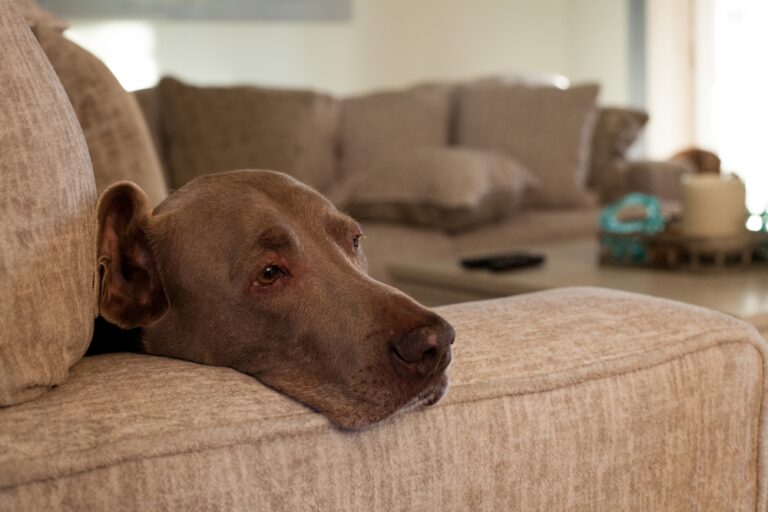
Your dog may still look at the sofa.
They may still bring you their favourite toy.
They may still wag their tail when you grab the leash.
But then they stop.
Instead of jumping, they stand and stare.
Instead of running upstairs, they wait.
Instead of jumping into the car, they put their front paws up and hesitate.
These small moments can be easy to overlook because your dog may still seem happy.
Dogs are also very good at hiding discomfort. A dog does not always cry or whimper when something hurts. Sometimes the only clue is a change in normal behavior.
That is why you should pay attention to what your dog used to do easily and what they are avoiding now.
Look for These Other Changes
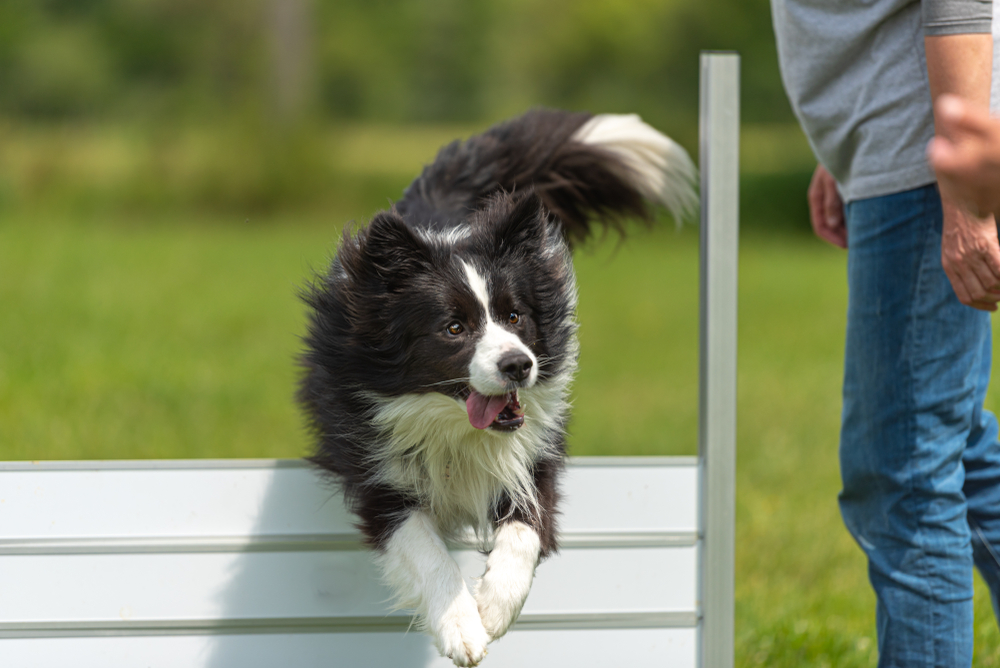
If your dog has stopped jumping, take a closer look at their everyday routine.
Do they also seem slower when getting up?
Are they taking longer to climb stairs?
Do they sit down during walks more often?
Have they stopped chasing their favourite ball?
Are they sleeping more than usual?
Do they seem stiff after resting?
Are they avoiding slippery floors?
Do they hesitate before getting into the car?
Are they less interested in playing?
None of these signs automatically means your dog has arthritis or another joint condition. However, several changes happening together deserve attention.
The RSPCA advises pet owners to speak with a veterinarian if they suspect arthritis because other health problems can cause similar signs.
Age Is Not the Only Possible Reason
Older dogs are often more likely to experience mobility changes, but it is important not to assume that every movement problem is simply part of getting older.
A younger dog can also experience mobility issues.
Previous injuries, body weight, genetics, physical activity, joint development, and other factors can all influence joint health.
Even an active dog that spends hours running and playing can sometimes develop stiffness or discomfort.
That is why your dog’s age alone should not determine how you respond.
If a young dog suddenly stops jumping, that change is worth noticing.
If an older dog gradually stops jumping, that is also worth noticing.
Your dog may be telling you that something has changed.
When You Should Talk to Your Veterinarian
If your dog suddenly stops jumping, especially after an injury or unusual activity, contacting your veterinarian is a sensible first step.
You should also arrange a veterinary examination if your dog is limping, struggling to stand, crying when touched, refusing to walk, showing swelling, or becoming unusually quiet.
A sudden and significant change should never be brushed off as normal aging.
A veterinarian can examine your dog and help determine whether the problem may involve the joints, muscles, bones, or another part of the body.
You can also record a short video of your dog walking, climbing stairs, getting up, or attempting to jump. This can give your veterinarian useful information about what you have noticed at home.
Small Changes at Home Can Make a Big Difference
While you are figuring out what is happening, there are simple ways to make your home easier for your dog to navigate.
If your dog struggles to jump onto the sofa, consider providing a pet step or ramp.
If your floors are slippery, place rugs or non-slip mats in areas where your dog walks frequently.
Give your dog a comfortable place to rest.
Keep their nails trimmed so they have better traction.
Avoid encouraging repeated high jumps if your dog is already hesitant.
For car rides, a ramp can make getting in and out easier.
These small changes are not about treating a medical condition. They are about helping your dog move around with greater confidence and reducing unnecessary strain.
Veterinary guidance also recommends environmental changes such as better traction, comfortable bedding, and ramps or steps for dogs experiencing mobility problems.
Weight Can Affect Your Dog’s Mobility
Your dog does not have to be visibly overweight for body weight to matter.
Extra weight can place additional stress on the joints, especially when a dog is running, climbing stairs, or jumping.
If your dog has gained weight and is also becoming less active, speak with your veterinarian about a healthy weight management plan.
Do not put your dog on a strict diet without professional guidance.
The goal is not simply to make your dog smaller.
The goal is to help your dog maintain a healthy body condition while getting the nutrition they need.
Keeping Joints Supported Every Day
Joint care should not only become a priority when your dog starts struggling.
Daily habits can support your dog’s overall mobility as they move through different stages of life.
Regular, controlled exercise can help dogs maintain muscle strength. A balanced diet can help support a healthy body weight. Comfortable sleeping areas can make rest easier. And regular veterinary checkups can help you catch changes before they become bigger problems.
Some pet parents also choose joint supplements as part of their dog’s daily wellness routine.
Supplements are not a replacement for veterinary care, especially when a dog is showing pain or a sudden change in movement. But for pet parents looking for additional nutritional support, a carefully formulated joint supplement may be worth discussing with their veterinarian.
Supporting Your Dog’s Joints With Mobility Plus
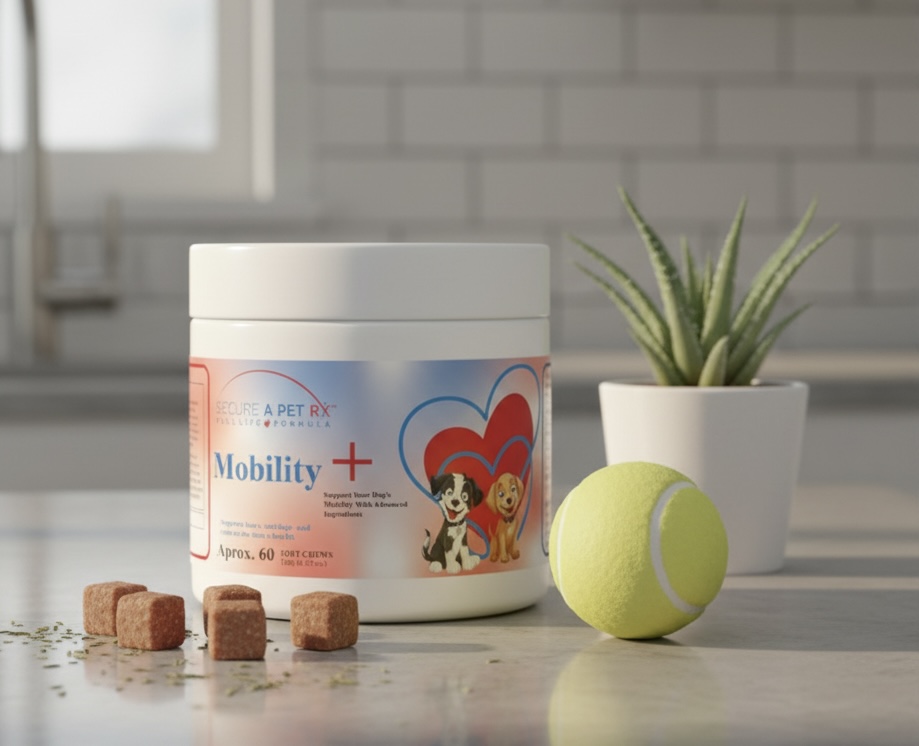
For pet parents who want to add daily joint support to their dog’s wellness routine, Secure a Pet RX offers Mobility Plus™.
Mobility Plus™ from Secure a Pet RX
The formula is designed around ingredients commonly used in joint support products, including glucosamine, MSM, chondroitin, turmeric, Boswellia, collagen, and eggshell membrane.
The goal is simple.
To give pet parents a convenient way to provide nutritional support for their dog’s joints as part of everyday care.
Mobility Plus™ comes in soft chews, which can make daily supplementation easier, especially for dogs that turn their nose up at tablets.
According to the product directions, the suggested amount is based on body weight and activity level, with one soft chew per 25 pounds of body weight daily. Pet parents should follow the product directions and speak with their veterinarian about what is appropriate for their individual dog.
The formula contains shellfish-derived glucosamine and porcine-derived chondroitin, so checking the ingredient list is particularly important if your dog has allergies, dietary restrictions, or other health considerations.
What Makes Mobility Plus Different
When you are choosing something for your dog, you want to know what is actually inside it.
Mobility Plus™ contains several ingredients selected for joint and connective tissue support.
Glucosamine and chondroitin are included to support healthy cartilage and joint structure.
MSM is included as part of the formula for joint and mobility support.
Turmeric and Boswellia provide botanical ingredients commonly included in joint wellness formulas.
Collagen and eggshell membrane are included to support connective tissue and joint structure.
The product is available as 60 soft chews per container, making it a convenient option for a daily routine.
Most importantly, it should be viewed as one part of your dog’s overall wellness plan rather than a quick solution to a mobility problem.
Give Your Dog More Reasons to Move
There is something heartbreaking about watching a dog stop doing something they once loved.
You may remember the days when your dog jumped onto the sofa without hesitation.
Now they look at it from the floor.
You may remember how excited they were to jump into the car for a walk.
Now they wait for you.
These moments can make a pet parent worry.
But noticing the change is already an important step.
You do not have to panic every time your dog skips a jump. Instead, watch the bigger picture.
Is your dog still excited about walks?
Are they getting up comfortably?
Are they playing normally?
Are they moving differently?
Are there other changes happening at the same time?
The earlier you notice changes in mobility, the sooner you can discuss them with your veterinarian and make appropriate adjustments.
A Comfortable Routine Can Help
Your dog does not need to jump onto every piece of furniture to have a happy life.
Sometimes the best thing you can do is make movement easier.
Take shorter walks if your veterinarian recommends them.
Choose comfortable walking surfaces.
Give your dog time to warm up.
Provide a supportive resting area.
Use ramps where appropriate.
Keep your dog at a healthy weight.
And make joint support part of a bigger wellness routine when appropriate.
Most of all, keep watching.
Your dog may not be able to say, “My legs feel stiff today.”
But they can show you.
The hesitation before the stairs.
The slower walk.
The skipped jump.
The extra time getting up.
Those little changes are worth listening to.
Final Thoughts
So, why is your dog not jumping anymore?
It could be something simple. It could be a temporary change. It could be age, reduced fitness, an old injury, weight, or developing joint discomfort.
There is no way to know the cause from one behavior alone.
What matters is that you noticed.
Your dog depends on you to notice the things they cannot explain.
If the change continues or comes with stiffness, limping, pain, reduced activity, or other unusual behavior, speak with your veterinarian. Do not assume that your dog is simply getting old.
And if your veterinarian agrees that nutritional joint support is appropriate, a product such as Mobility Plus™ can be considered as part of a broader daily wellness routine.
Because every jump, every walk, every game of fetch, and every little run across the garden is part of the life your dog loves.
Helping them stay comfortable and mobile means helping them enjoy more of those moments with you.
Frequently Asked Questions
Why is my dog suddenly not jumping anymore
A sudden change can have several possible causes, including an injury, discomfort, muscle problems, or joint issues. If the change is sudden or your dog appears painful, contact your veterinarian.
Is it normal for an older dog to stop jumping
Older dogs may become less willing to jump, but it should not automatically be dismissed as normal aging. Difficulty jumping can be associated with joint discomfort and other conditions, so it is worth discussing with your veterinarian.
How can I tell if my dog is having joint problems
Look for changes such as stiffness, slower movement, difficulty getting up, reluctance to climb stairs, hesitation before jumping, reduced interest in play, or shorter walks. These signs can have different causes, so veterinary assessment is important.
Should I make my dog stop jumping
If your dog is showing signs of discomfort, avoid encouraging repeated high jumps until you know what is causing the problem. A ramp or pet step may provide an easier way to reach furniture or get into a vehicle.
Can joint supplements help my dog
Some joint supplements are used to provide nutritional support for mobility and joint health. However, supplements are not a replacement for diagnosis or treatment. Speak with your veterinarian before adding a new supplement, particularly if your dog has a medical condition or takes medication.
What is Mobility Plus made with
Mobility Plus™ contains glucosamine, MSM, Boswellia, Devil’s Claw, turmeric, collagen, chondroitin, and eggshell membrane. The product is provided as a soft chew for daily nutritional joint support.
How often should I give Mobility Plus to my dog
The product directions recommend one soft chew per 25 pounds of body weight daily, adjusted according to age and activity level. Always follow the product instructions and ask your veterinarian if you are unsure about the appropriate amount.
When should I take my dog to the vet
Contact your veterinarian if your dog suddenly stops jumping, develops a limp, appears painful, struggles to stand, refuses to walk, has swelling, or shows a significant change in normal behavior. A professional examination can help identify the underlying cause.