You know your dog better than anyone.
So when your normally playful companion suddenly starts pacing around the house, hiding under furniture, barking at every little sound, or following you from room to room, it can be difficult to watch.
You may wonder what changed.
You may try extra cuddles, a longer walk, a favourite toy, calming music, or a new routine. Sometimes these things help. Other times, your dog still seems unable to settle.
That can leave you feeling helpless.
The good news is that there are several natural ways to support a calmer and more comfortable environment for an anxious dog. The key is not to expect one solution to work overnight. Dogs can become anxious for many different reasons, and finding what works often takes patience, consistency, and a little trial and error.
In this guide, we will look at simple ways to help your dog feel safer, calmer, and more settled, including natural calming support that can become part of their daily routine.
Understanding why your dog may feel anxious
Anxiety does not always look the way we expect.
Some dogs become very vocal. Others become unusually quiet. A worried dog may pace, pant, bark, whine, hide, become destructive, or try to escape.
Some dogs become anxious when they are left alone. Others react strongly to thunderstorms, fireworks, unfamiliar places, travelling, grooming, or visits to the veterinarian.
The important thing is to pay attention to changes in your dog.
The RSPCA notes that signs of distress can include pacing, excessive barking, destructive behaviour, inappropriate toileting, and attempts to escape, particularly in dogs experiencing separation anxiety.
Your dog is not trying to make your life difficult.
They may simply be telling you that something feels frightening, unfamiliar, or overwhelming.
That change in perspective can make a big difference. Instead of thinking, “Why is my dog behaving like this?” you can start thinking, “What is my dog trying to tell me?”
Create a safe place your dog can choose
When your dog feels overwhelmed, having somewhere quiet to retreat can provide comfort.
It does not need to be anything complicated.
A comfortable bed in a quiet room can work. You could add a familiar blanket or favourite toy. During loud events such as fireworks or storms, closing curtains and reducing outside noise can also help.
The important part is allowing your dog to use the space voluntarily.
Do not force your dog into a hiding place or pull them out when they want to retreat. A safe space should feel like somewhere they can go when they need a break.
For dogs frightened by fireworks, the RSPCA recommends keeping them indoors, reducing visual stimulation, and providing a comfortable hiding place where they can retreat.
Sometimes something as simple as giving your dog permission to have a quiet moment can make them feel more secure.
Give your dog enough physical and mental activity
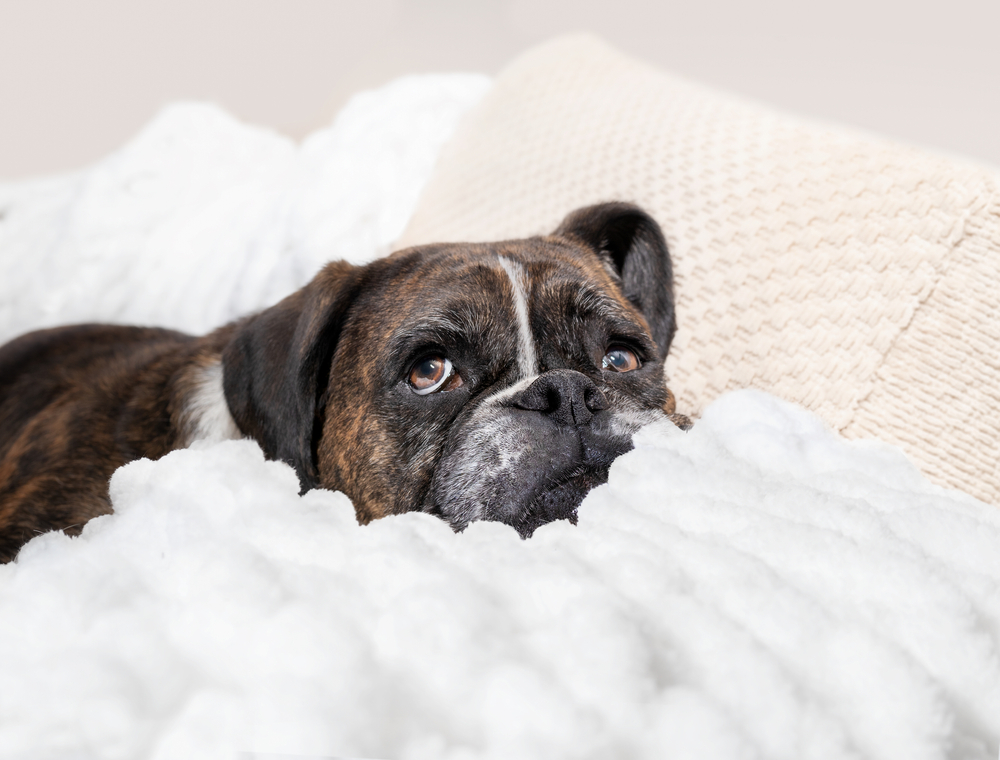
An anxious dog can sometimes have a lot of nervous energy.
Regular exercise can help your dog use that energy in a healthy way. But physical exercise is only part of the picture.
Dogs also need opportunities to use their minds.
Try changing your walking route occasionally. Allow your dog to stop and sniff. Play gentle games such as fetch or tug. Use food puzzles or safe enrichment activities that encourage your dog to explore and think.
These activities give your dog something positive to focus on.
The RSPCA explains that appropriate enrichment can support relaxation, reduce stress and anxiety, and provide dogs with opportunities to engage in natural behaviours such as sniffing, exploring, playing, and interacting socially.
A dog that has had a chance to move, explore, sniff, play, and think may find it easier to settle afterwards.
Keep your routine predictable
Dogs often feel more comfortable when they know what to expect.
If feeding time, walks, playtime, bedtime, and quiet time happen around similar parts of the day, your dog may have fewer surprises to worry about.
This can be particularly useful for dogs that become anxious when their owners leave.
Try not to turn every departure into a dramatic goodbye. The same applies when you come home. Keep your movements and greetings calm.
This does not mean ignoring your dog completely. It simply means creating a calmer pattern around leaving and returning.
The RSPCA recommends calm leaving and returning routines and rewarding relaxed behaviour as part of managing separation-related anxiety.
Over time, your dog can learn that you leaving the house is not something they need to panic about.
Help your dog feel comfortable when you are away
For some pet owners, the hardest part is knowing that their dog becomes anxious as soon as they walk out the door.
You might come home to scratched doors, overturned items, barking complaints from neighbours, or a dog who looks exhausted from spending hours in distress.
This can be heartbreaking.
Start by making alone time feel less unusual.
You can practise very short periods away and gradually increase them when your dog remains comfortable. You can also leave a safe enrichment activity that gives your dog something positive to focus on.
A food-filled toy can sometimes help create a positive association with alone time. However, this approach may not be suitable for dogs with severe anxiety, as highly anxious dogs may not eat when left alone.
If your dog shows severe distress, speak with your veterinarian rather than trying to manage the problem alone.
Be careful not to punish anxious behaviour
This is one of the most important things to remember.
If your dog destroys something while you are away, has an accident indoors, barks excessively, or hides during a storm, punishment will not teach them how to feel safe.
Anxiety is an emotional response.
Your dog may not understand why they are being punished. It can also make an already stressful situation even harder for them.
Instead, focus on identifying the trigger and helping your dog cope with it in a calmer way.
Reward relaxed behaviour when you see it.
If your dog chooses to lie quietly on their bed instead of pacing around the room, that is worth noticing. Calm behaviour can be encouraged through positive experiences and rewards.
Try calming support as part of a daily routine
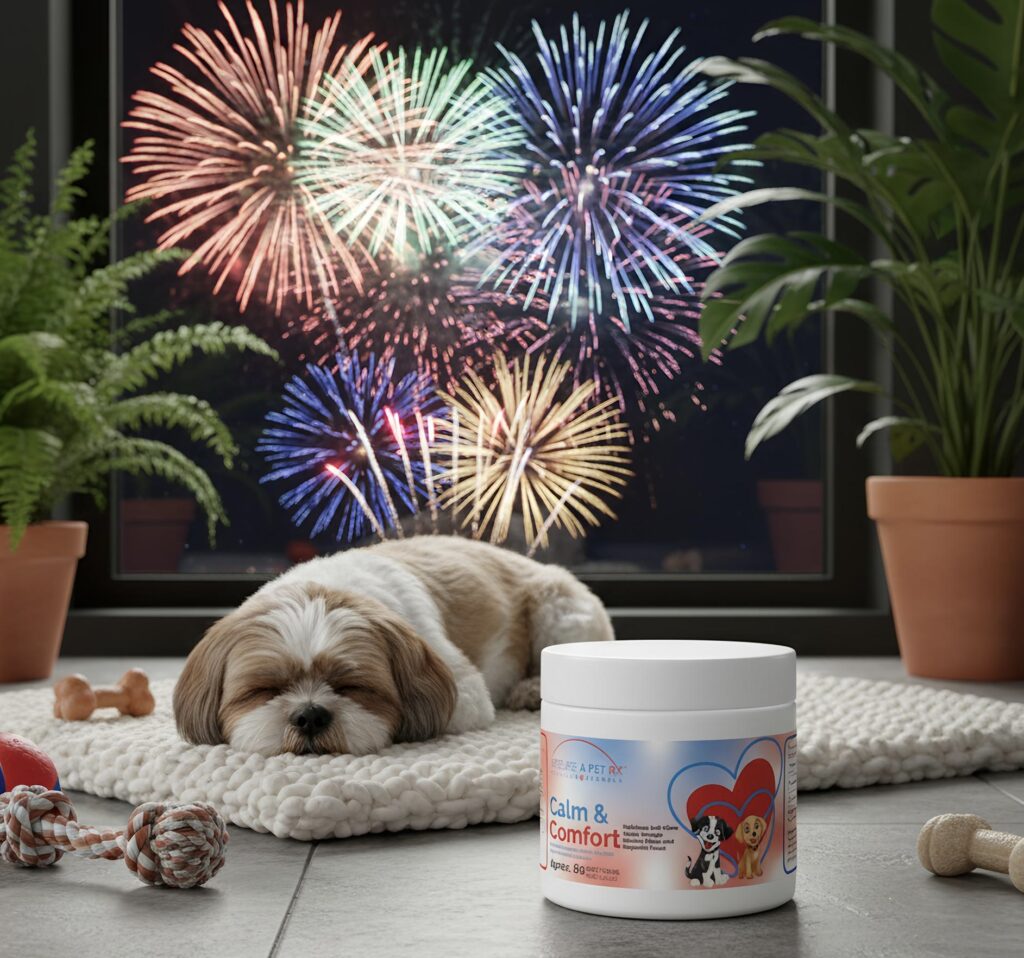
Sometimes environmental changes and training are not enough on their own.
This is where natural calming support may have a place in your dog’s routine.
Calm & Comfort™ from Secure a Pet RX™ was created to support dogs experiencing stress, nervousness, hyperactivity, and situations that can make them unsettled.
It contains Taurine, Inositol, Theanine, Thiamine, and Lemon Balm. The formula is designed to support relaxation, focus, and emotional balance without making the dog drowsy.
That last part can be especially important for pet owners.
You do not necessarily want your dog to simply become sleepy. You want your happy, alert companion to feel more comfortable and balanced.
Calm & Comfort™ is available as soft chicken-flavoured chews, with 60 servings in each container. The product page states that it can be used daily for ongoing support or 30 to 60 minutes before a stressful event.
This makes it suitable for situations such as:
- Thunderstorms
- Fireworks
- Travel
- Grooming
- Veterinary visits
- Being home alone
- Nervous or restless behaviour
- Everyday stress
You can learn more about Calm & Comfort™ for dogs and see the full ingredient and usage information before deciding whether it is appropriate for your dog.
Make stressful events easier to manage
Some dogs seem perfectly happy most of the time but struggle during specific situations.
Maybe your dog shakes every time a storm begins.
Maybe fireworks turn your relaxed dog into a frightened one.
Maybe your dog becomes extremely nervous when they realise a trip to the veterinarian is coming.
These situations can be especially difficult because you know the stressful event is coming, but your dog does not understand why.
Preparation can help.
Before a predictable stressful event, give your dog exercise earlier in the day, prepare their safe space, close curtains if appropriate, and keep familiar toys or enrichment activities nearby.
During fireworks, the RSPCA recommends keeping dogs indoors, remaining calm, reducing outside stimulation, and allowing them to retreat to a comfortable hiding place if they choose.
If you use a calming supplement, follow the product directions rather than giving more because your dog still seems unsettled.
Pay attention to your dog’s body language
Dogs communicate constantly, but they do not use words.
Their ears, tail, eyes, posture, movement, and behaviour can tell you a lot.
A worried dog may lower their body, tuck their tail, pull their ears back, yawn excessively, lick their lips, avoid eye contact, or try to move away from whatever is making them uncomfortable.
Learning these signs can help you intervene earlier.
For example, if you notice your dog becoming uncomfortable when thunder starts, you can move them to their safe space before their fear becomes overwhelming.
The earlier you recognise the signs, the easier it may be to support your dog.
Give your dog time
This is something many loving pet owners need to hear.
You are not failing your dog if they do not become calm after one walk, one training session, or one change to their routine.
Some dogs need more time.
Your dog may have had a frightening experience in the past. They may be naturally sensitive. They may be struggling with a change in their environment or routine.
Progress can be small.
Maybe your dog used to pace for an hour and now settles after twenty minutes.
Maybe they used to hide during every storm but now come to their bed.
Maybe they can stay alone for ten minutes without becoming distressed.
Those small improvements matter.
Calming an anxious dog is often about creating many small positive experiences rather than searching for one perfect solution.
When you should speak with your veterinarian
Natural approaches can be helpful, but they are not a replacement for professional veterinary care.
If your dog suddenly develops unusual anxiety, their behaviour becomes severe, they injure themselves trying to escape, or their condition does not improve, speak with your veterinarian.
A change in behaviour can sometimes have an underlying health or behavioural cause that needs proper assessment.
The RSPCA recommends discussing anxiety concerns with a veterinarian, who may provide advice or refer a dog to an appropriately qualified behaviour specialist.
You should also speak with your veterinarian before starting a new supplement, particularly if your dog has an existing health condition or takes medication. The Calm & Comfort™ product information specifically recommends veterinary consultation in these situations.
A calmer dog starts with understanding
When your dog is anxious, it can be tempting to look for an instant solution.
But your dog may need something more meaningful than that.
They need to feel safe.
They need patience.
They need consistency.
They need you to notice when something is wrong and help them through it.
Start with the basics. Create a safe space. Keep a predictable routine. Give your dog physical and mental enrichment. Prepare for stressful events. Reward calm behaviour. Pay attention to their body language.
And when you feel that your dog needs additional support, a gentle calming supplement can become part of that bigger approach.
Calm & Comfort™ from Secure a Pet RX™ combines ingredients such as Theanine, Lemon Balm, Taurine, Thiamine, and Inositol to support relaxation and emotional balance without sedation.
Because at the end of the day, most pet owners are not asking for a perfect dog.
They simply want their dog to feel safe enough to relax, comfortable enough to enjoy their day, and happy enough to be themselves again.
And sometimes, that is the most important kind of support we can give them.
Conclusion
Helping an anxious dog does not always require complicated solutions. A calm routine, regular exercise, gentle attention, and a safe space can help your dog feel more secure. With patience, consistency, and the right natural support, you can help your furry friend feel calmer and more comfortable every day.
Frequently Asked Questions
What are natural ways to calm an anxious dog?
Some natural approaches include maintaining a consistent routine, providing daily exercise, creating a quiet resting space, using gentle reassurance, offering mental stimulation, and reducing situations that trigger anxiety. Every dog is different, so it may take some time to find what works best.
How can I calm my dog naturally at home?
Start by creating a peaceful environment where your dog has a comfortable place to relax. Keep meals, walks, playtime, and bedtime as consistent as possible. Gentle interaction and calming activities can also help your dog feel more secure.
Can exercise help an anxious dog?
Regular exercise can support your dog’s overall physical and emotional wellbeing. Walks, gentle play, and age-appropriate activities can provide mental stimulation and help your dog release excess energy. If your dog has mobility or health concerns, ask your veterinarian about suitable activities.
What can I give my dog for anxiety naturally?
Some pet supplements contain ingredients that are intended to support calmness and general wellbeing. However, natural does not automatically mean suitable for every dog. Talk with your veterinarian before giving your dog a new supplement.
Does ashwagandha help dogs with stress?
Ashwagandha is an adaptogenic ingredient commonly included in wellness supplements. Some dog supplements use it as part of a formula intended to support calmness and resilience. The suitability of any supplement depends on the individual dog, so veterinary guidance is recommended.
When should I worry about my dog’s anxiety?
If anxiety is severe, persistent, suddenly appears, or interferes with eating, sleeping, normal activity, or daily life, speak with your veterinarian. A sudden behavior change can sometimes be connected to an underlying health issue.
Can a routine help an anxious dog?
Yes. Dogs often feel more comfortable when they know what to expect. Keeping walks, meals, rest, and bedtime reasonably consistent can give your dog a stronger sense of security.
Should I punish my dog for anxious behavior?
No. Punishing a frightened or anxious dog can increase fear and make the situation worse. Instead, try to understand what is triggering the behavior and provide calm, supportive guidance.